
“Why Does My Music Sound So Robotic?”
"Why does my music sound so robotic?" (Case Study)
"All that you need in the way of technique for drawing is bound up in the technique of seeing – that is, of understanding, which after all is mainly dependent on feeling. If you attempt to see in the way prescribed by any mechanical system of drawing, old or new, you will lose the understanding of the fundamental impulse. Your drawing becomes a meaningless diagram and the time so spent is wasted."
"• Kimon Nicolaides, The Natural Way to Draw
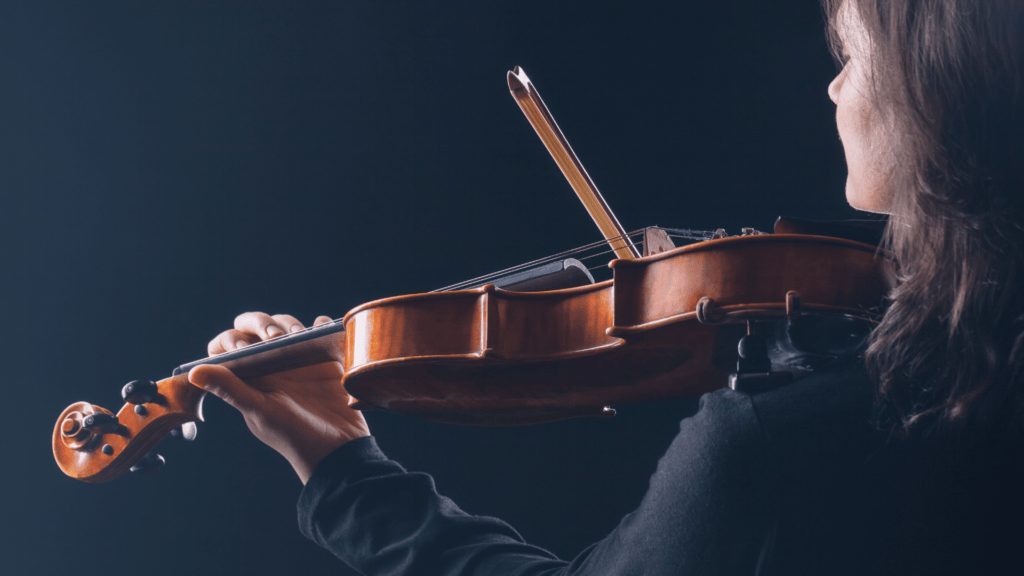
After playing her piece for me in a lesson one day, Sara, a violin student who was twelve at the time, asked, "Why does my music sound so robotic?" What a great question! What self-awareness! I was so pleased she had asked this because even though she had gotten all the notes right that day, her playing had sounded rather robotic. I was glad to know we were both on the same page about feeling emotionally unsatisfied with her performance. The stage was now set for discovering what to do about it. I could easily intuit that what was missing from her music was the sense of emotional expression, the flow, the "inner meaning," the magic spark that turns mere sounds into vibrant music. Like many experienced musicians, I intuitively knew how to make the music come alive in my own playing, but how could I impart this skill to my young student? And here I faced a dilemma: I could easily ask her to play with more varied dynamics, articulations, or even to play while thinking of a story or image that the song evoked. But from experience I knew that asking her to do so would be tantamount to asking her to apply more effort to her playing. I had seen, time and again, that while such conventional means of musical expression would probably bring a certain degree of interest to her music, it was just as likely that she could end up attempting each of these techniques in a way that nonetheless sounded mechanical or forced. So, in order to tap into the magic we were both seeking, she needed to be guided to a fundamentally different source of musical expression. My first step was to better understand what was going on for my student when she played. Over my years studying the Alexander Technique, I was well aware of the mind-body connection, and how the quality of someone's thinking or attention affected their body and actions. With this in mind, I asked her what she had been paying attention to while she played. She thought for a moment and then replied, "I guess I was just trying to get the notes right." Aha! This made perfect sense. Her attention was on getting the notes right, and this was exactly how her performance had sounded. So, if the problem was really about what she was paying attention to, what if she could pay attention to something else? Would she get a different result? I paused for a moment to think of some of the ways we commonly talk about music that's really alive: "heartfelt," "with real feeling," "soulful." These terms all imply some kind of emotional connection. So, I asked if she had felt any emotions while she played and she said, "No." And that explained it! Without her emotional involvement, there's no way she could bring the music alive. But here, again, I saw the same dilemma as before. Yes, I wanted her to be more emotionally involved in her playing, but I was wary of trying to get her to feel something in particular because this might lead her to inadvertently force her own emotional response. That would never do. I needed to instead lead her to the source of her own emotional response to music. So I asked her, "When you listen to a piece of music that you like, how do you know that you like it? What in your experience tells you that you like it?" She thought for a moment and replied, "It makes me feel good, warm, like I want to dance." Excited, I replied, "Exactly! There's a pleasant emotional response in your body when you hear music you like. And what about music you don't like? How do you know you don't like it?" I asked. She said, "I don't feel good. I feel nothing–closed off." "Exactly!" I replied. "There's an unpleasant emotional response in your body when you hear music you don't like." Explaining, I said, "That pleasant or unpleasant feeling in your heart, head, or gut when you listen to music is how your 'inner audience member' talks to you. Your inner audience member listens to all the music that you hear, even the music you play on your violin, and expresses her opinion via these feelings in your body. What if you were to play this piece again and, for every note that you play, notice your inner audience member's feelings in your heart and gut?" The results were stunning. This time, as she played the piece again, instead of hearing a mere sequence of sounds, I heard hercoming through her playing. It's as if her essence, the core of her being, was flowing through her sound. Her body was more relaxed, the music flowed freely, and there was a sense of the music being truly alive. And even though she was playing a relatively simple song, I was really touched by her performance and wanted to hear more. I asked her what she noticed. She said, "I enjoyed that! It felt good. I really felt the music. It was more fun, and it even felt easier to get the notes right." Amazing! Not only did her technique and sound quality improve, but it felt more effortless, she had more fun, and she was able to suffuse her music with the aliveness inside her that was just waiting to be expressed. Here's the moral of the story: in order for your art to come alive, you need to pay attention to that which is alive in you. Merely paying attention to "getting the notes right" – even if you have very masterful and subtle technique – will ultimately result in stale art because "getting the notes right" is a static idea, and static ideas have static results. Instead, what's needed is to connect to something dynamic and alive in yourself while you create, and to let that inform your artistic choices, moment by moment. The first step in this process is to get to know your inner audience member.